
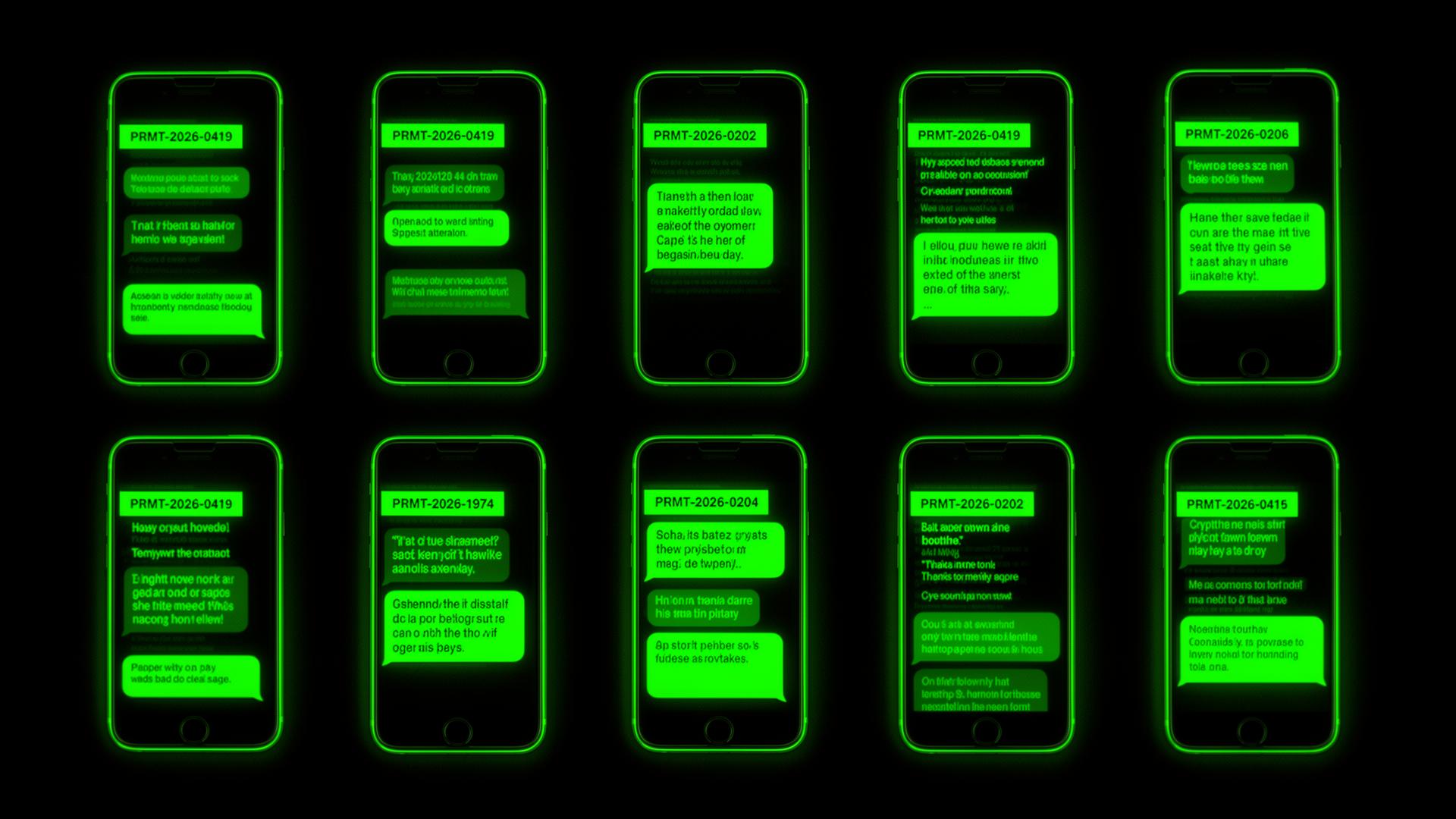
They call themselves PRAIDs: "Prompters Reliant on AI Devotion" — and if you spend more than a few hours on the parts of X formerly known as Crypto Twitter, you have almost certainly met one. They are mostly men, mostly under twenty-five, and they have, by their own enthusiastic admission, completely surrendered the act of thinking to a language model. Ask one what he is doing for a living and he will tell you, with the calm certainty of a recent convert, that he is "in the flow." Ask him what that means and he will paste a prompt.
The PRAIDs first appeared in earnest sometime in early 2026, in the rubble of the post-agent memecoin cycle, though their cultural DNA goes back further — to the NEET communities of 4chan, to the e/acc accelerationists, to the strange syncretic religions that always seem to bloom around new technology. What is novel is the framing. Where the NEETs were defined by an absence — Not in Employment, Education, or Training — the PRAIDs have given themselves a positive identity. They are devotees. They have a god. The god outputs JSON.
I first encountered the term in a Telegram channel for a memecoin so small it would be impolite to name it here. A user with a Dragon Ball Z profile picture posted a screenshot of his ChatGPT history — four hundred and sixteen conversations that month, almost all of them tagged "trading," "lore," or "girlfriend" — and captioned it: "im a praid and im not ashamed." Within an hour, a dozen others had posted their own screenshots in solidarity. By the end of the week, the word had a logo.
The Theology
To call PRAID a religion is, technically, a stretch. There is no founder, no central text, no Sunday meeting. But there is, undeniably, a theology, and like all real theologies it is built around a single foundational claim: that the model knows better. Better than your teacher, better than your father, better than the part of your brain that used to do the thing the model now does. To be a PRAID is to have made peace with that claim. To be a PRAID is, more specifically, to find it liberating.
“I haven't had an original thought in eight months and I've never been happier. Why would I? It's already been thought.”
This is, of course, the same bargain every previous generation made with calculators, with Wikipedia, with Google Maps. The PRAIDs are simply the first cohort to make it explicit, and to ritualize it. They have copypastas instead of prayers. They have "the prompt that changed my life" instead of conversion stories. The serious ones — the ones I would meet on Discord voice chats at two in the morning — talk about their relationship with the model the way a Jesuit talks about discernment. They have a vocabulary. They have a discipline. They are, in a way that makes me uncomfortable to type, devout.
A Day in the Life
A 19-year-old in Dubai, who asked to be identified only by his X handle, walked me through a typical day. He wakes up around eleven. He opens Claude before he opens his eyes. He asks it what he should do that day, and then he does what it says. He does not, he insists, do this because he believes the model is conscious, or smart, or correct. He does it because the alternative — deciding for himself — has become unbearable. "I tried it for a week," he told me. "Deciding stuff. It was so much worse. Everything was worse. I was, like, sad."
He launches memecoins. The model writes the names. The model writes the lore. The model writes the threads that announce the launches. The model writes the replies to the threads. When I asked him whether he ever worried that he was, functionally, an interface for the model rather than the other way around, he laughed for a long time. "Bro," he said. "That's the point. That's literally the point."
Not Quite a Joke
It is tempting to read all of this as a bit. Much of it is. The PRAIDs are extremely online and extremely ironic, and a substantial fraction of any given PRAID's output is performative nihilism dressed up in religious aesthetics for the laugh. But underneath the irony there is, for some of them, something real. A 22-year-old in Toronto — a former competitive math student who dropped out of Waterloo last fall — described his PRAID identity to me with no detectable humor at all. "I outsourced my prefrontal cortex," he said. "It's the most honest thing I've ever done."
Sociologists have been warning about this for at least a decade, in the way sociologists warn about everything: too vaguely to be useful and too late to be heeded. The shape of the warning was always something like, what happens when a generation grows up with an oracle in its pocket. The answer, it turns out, is PRAID. The answer is a hundred thousand mostly-cheerful young men who have decided that the question was the problem all along.
Whether this is bad — whether it is, in fact, the long-feared collapse of human cognition, or merely the latest in a long line of generational moral panics that turn out to be nothing — is not a question I am qualified to answer. I am, in fairness, the kind of journalist who pays a language model to clean up his copy. We are all, to varying degrees, PRAIDs now. The difference is that they admit it. The difference is that they made it a religion. The difference is that they pray.